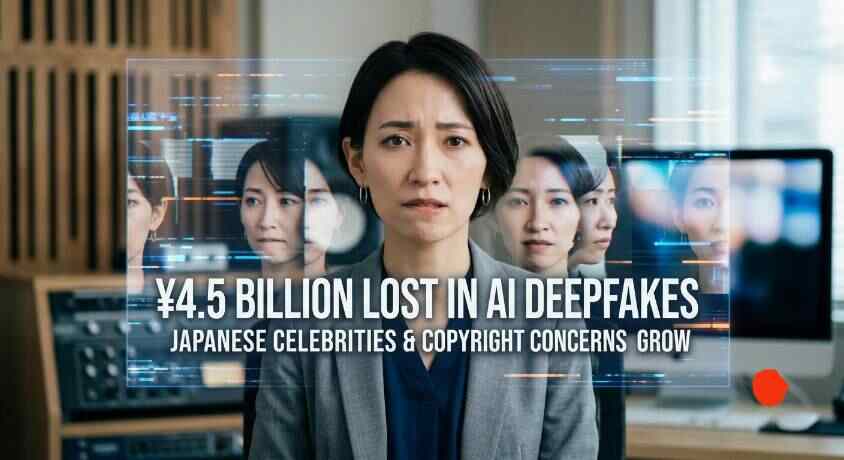
AI-generated deepfakes caused up to ¥4.5 billion in estimated copyright losses for Japanese celebrities, raising pressure for stronger legal protections.
I don’t think you can compare it the same way though. For one, you’re comparing the marketing departments of companies versus the average consumer. The decision making process is different and the product is different. For piracy, we’re looking a a copy of a piece of work meant to be sold to the masses whereas this is a brand new commissioned piece of work for a specific purpose.
Add in the fact that the licensing of consumer media makes it so that you never actually own that piece of media. Whereas in this case, in most scenarios, the company who purchased the celebrity’s likeness for the production of this work gets to use that work forever.
There’s also the fact that using someone’s likeness without consent is a whole other can of worms.


I don’t think you can compare it the same way though. For one, you’re comparing the marketing departments of companies versus the average consumer. The decision making process is different and the product is different. For piracy, we’re looking a a copy of a piece of work meant to be sold to the masses whereas this is a brand new commissioned piece of work for a specific purpose.
Add in the fact that the licensing of consumer media makes it so that you never actually own that piece of media. Whereas in this case, in most scenarios, the company who purchased the celebrity’s likeness for the production of this work gets to use that work forever.
There’s also the fact that using someone’s likeness without consent is a whole other can of worms.