Range Anxiety comes from living on the east coast and wide availability is not a thing, unless it’s a gas station. I mean some places are starting to roll out some more accessibility towards them but seeing a charger at Mc.Donalds, isn’t a thing as much as it is on the west cost. I’m guessing on the west coast you’ll see them in hospital garages, strip mall parking lots, fast food parking lots and of course gas stations. EV’s have always been more a west coast choice.
“Anywhere,” is broad af and isn’t true. Any home, yes. Anywhere is dependent on if a charger is available. I mean yeah, you could have a secondary charger that you have with you like a spare gas container/jerry can in your vehicle and find a spot where you can charge it but at that point you may as well go to a station. Also, if no one really uses their full tank and if 20% is the point where you’re more likely to charge it before the actual anxiety kicks in, you’re gonna want to calculate the amount of time it takes on an average speed for it to run out which makes it so that you’re pretty much screwed if you’re not near a charger, nmw.
Like someone using gas, you could be running on fumes and get to a station, when that ev battery is done, it’s done. I’m pretty sure a lot of us have been in a car and someone’s driving and saying lets see how far we can drive on empty before it runs out completely. It takes so long in a gas car that it’s miraculous and like a joke and a game at certain point; hell! There was a Seinfeld bit on that too with Kramer and test driving a car and it going empty and him and the car lot dude were seeing how far they could get on empty. I know it’s bad for the environment and stupid expensive but the seconds it takes to fill a gas tank is far more worth it to the average individual but that’s my opinion.
The one thing I can say about gas, is a gas tank takes seconds to fill via gas container/jerry can of gas and get you to a station. If you have no electrical source for the charger you brought, how are you gonna charge it just enough to get you to a station to fill it?
Range Anxiety comes from living on the east coast and wide availability is not a thing, unless it’s a gas station.
Before I moved around the world, I lived in Indianapolis. The EV situation there wasn’t fantastic, but it was good enough. Grocery stores, hotels, parking garages, apartments, Costco, even some public parks had charging stations in front of them, not to mention a lot of people’s workplaces. I’m sure that New York, Boston, Atlanta etc. are all better than Indy was, and as EV adoption increases, having chargers in your parking lot will become more and more of a perk.
“Anywhere,” is broad af and isn’t true.
An order of magnitude more places than you can find gas outside a gas station.
you’re gonna want to calculate the amount of time it takes on an average speed for it to run out which makes it so that you’re pretty much screwed if you’re not near a charger, nmw.
Every EV instrument panel I’ve ever seen includes a “range remaining,” same as modern gas cars.
Like someone using gas, you could be running on fumes and get to a station, when that ev battery is done, it’s done.
This seems like a really weird objection. When you’re out of gas in an ICV, you’re done; when you’re out of electricity in an EV, you’re done. There’s no such thing as “running on fumes,” actually; engines need liquid gasoline to inject into the cylinders. When the gas gauge hits empty but the car is still running, that’s just because the sensor that reports gas capacity isn’t sensitive enough to detect the last remaining puddle of gas in the tank. That problem is far less pronounced with battery capacity. So what you’re complaining about here is that the battery state-of-charge sensor is too precise.
I mean, that’s just strange.
The one thing I can say about gas, is a gas tank takes seconds to fill via gas container/jerry can of gas and get you to a station.
There are two scenarios for running out of gas in an ICV:
one, you run out right by the pump, or in stop-and-go traffic in town. Both an EV driver and an ICV driver in that situation would do the same thing: ask for help to push it to the pump. The EV driver has an advantage, though: they can push their car into anyone’s driveway and ask the owner if they can plug in for a few minutes.
two, you run out on the freeway, far from town. Again, both an EV driver and an ICV driver in that situation would call for help to get them to a station. The ICV driver would fill up a jerry can and take it back to the car. The EV driver would save a trip, because they’d just have a truck tow their car to a station where they could charge up. And actually, just like AAA has spare cans of fuel in their roadside assistance vehicles, some of them are starting to carry around a generator or mobile power bank to get cars that last few miles they need to get to a station.
But for all of this, remember: most of the times you’ve ever run out of gas, it’s not because you misjudged a distance. It’s usually because you didn’t realize how low the tank was when you left. With an EV, you don’t have to worry about that because your battery is full when you leave the house. That or you’re going on a road trip, for which you’ll need to plan anyway; might as well just plan charging stops. Most EVs have that part built into their infotainment systems.
Honestly, I don’t remember the last time I ran out of gas. Like, completely ran out. I know it’s happened to me, but it has been a very long time. Twenty years or more, maybe. I just don’t think it’s as big an issue for most people as they think it will be.


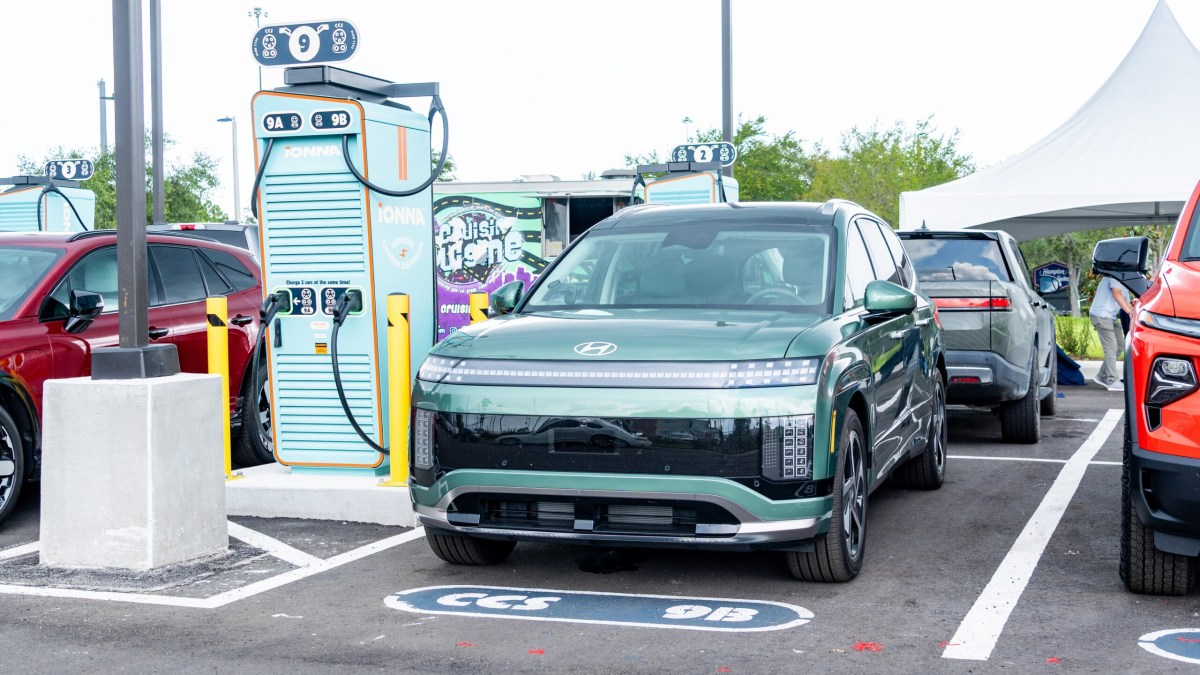
Range Anxiety comes from living on the east coast and wide availability is not a thing, unless it’s a gas station. I mean some places are starting to roll out some more accessibility towards them but seeing a charger at Mc.Donalds, isn’t a thing as much as it is on the west cost. I’m guessing on the west coast you’ll see them in hospital garages, strip mall parking lots, fast food parking lots and of course gas stations. EV’s have always been more a west coast choice.
“Anywhere,” is broad af and isn’t true. Any home, yes. Anywhere is dependent on if a charger is available. I mean yeah, you could have a secondary charger that you have with you like a spare gas container/jerry can in your vehicle and find a spot where you can charge it but at that point you may as well go to a station. Also, if no one really uses their full tank and if 20% is the point where you’re more likely to charge it before the actual anxiety kicks in, you’re gonna want to calculate the amount of time it takes on an average speed for it to run out which makes it so that you’re pretty much screwed if you’re not near a charger, nmw.
Like someone using gas, you could be running on fumes and get to a station, when that ev battery is done, it’s done. I’m pretty sure a lot of us have been in a car and someone’s driving and saying lets see how far we can drive on empty before it runs out completely. It takes so long in a gas car that it’s miraculous and like a joke and a game at certain point; hell! There was a Seinfeld bit on that too with Kramer and test driving a car and it going empty and him and the car lot dude were seeing how far they could get on empty. I know it’s bad for the environment and stupid expensive but the seconds it takes to fill a gas tank is far more worth it to the average individual but that’s my opinion.
The one thing I can say about gas, is a gas tank takes seconds to fill via gas container/jerry can of gas and get you to a station. If you have no electrical source for the charger you brought, how are you gonna charge it just enough to get you to a station to fill it?
Before I moved around the world, I lived in Indianapolis. The EV situation there wasn’t fantastic, but it was good enough. Grocery stores, hotels, parking garages, apartments, Costco, even some public parks had charging stations in front of them, not to mention a lot of people’s workplaces. I’m sure that New York, Boston, Atlanta etc. are all better than Indy was, and as EV adoption increases, having chargers in your parking lot will become more and more of a perk.
An order of magnitude more places than you can find gas outside a gas station.
Every EV instrument panel I’ve ever seen includes a “range remaining,” same as modern gas cars.
This seems like a really weird objection. When you’re out of gas in an ICV, you’re done; when you’re out of electricity in an EV, you’re done. There’s no such thing as “running on fumes,” actually; engines need liquid gasoline to inject into the cylinders. When the gas gauge hits empty but the car is still running, that’s just because the sensor that reports gas capacity isn’t sensitive enough to detect the last remaining puddle of gas in the tank. That problem is far less pronounced with battery capacity. So what you’re complaining about here is that the battery state-of-charge sensor is too precise.
I mean, that’s just strange.
There are two scenarios for running out of gas in an ICV:
one, you run out right by the pump, or in stop-and-go traffic in town. Both an EV driver and an ICV driver in that situation would do the same thing: ask for help to push it to the pump. The EV driver has an advantage, though: they can push their car into anyone’s driveway and ask the owner if they can plug in for a few minutes.
two, you run out on the freeway, far from town. Again, both an EV driver and an ICV driver in that situation would call for help to get them to a station. The ICV driver would fill up a jerry can and take it back to the car. The EV driver would save a trip, because they’d just have a truck tow their car to a station where they could charge up. And actually, just like AAA has spare cans of fuel in their roadside assistance vehicles, some of them are starting to carry around a generator or mobile power bank to get cars that last few miles they need to get to a station.
But for all of this, remember: most of the times you’ve ever run out of gas, it’s not because you misjudged a distance. It’s usually because you didn’t realize how low the tank was when you left. With an EV, you don’t have to worry about that because your battery is full when you leave the house. That or you’re going on a road trip, for which you’ll need to plan anyway; might as well just plan charging stops. Most EVs have that part built into their infotainment systems.
Honestly, I don’t remember the last time I ran out of gas. Like, completely ran out. I know it’s happened to me, but it has been a very long time. Twenty years or more, maybe. I just don’t think it’s as big an issue for most people as they think it will be.