
• 0 Posts
  • 48 Comments
Joined 1 month ago
cake
Cake day: January 20th, 2026

help-circle

  • I’m the bad faithed one? You don’t engage with the fact that soviet-occupied “Poland” was actually Ukraine, Belarus and Lithuania, reduce the 10 years of collective security proposals under the Litvinov doctrine to “an agreement that was never gonna happen anyway”, and you minimize the soviet war contributions in my own country against fascism 3 years before even WW2 started. You also completely ignore the fact that the English, French and Americans perfectly understood the Molotov Ribbentrop for what it was: buying time against Nazi invasion because they had been left alone by western Europe.

    Answer this question: what would have happened to the “polish” territories invaded by the Soviets had it been the Nazis instead (only alternative possible). Then explain to me how that’s desirable.

    You’re low effort in your response not because “I’m bad faith”, you’re low effort because you don’t have shit to say to historical evidence contradicting your western-sponsored anticommunism.



  • I’m not arguing that Europe doesn’t have the potential for being a force of good, I’m arguing that as of now, it’s simply not. The EU was formed not with peace and stability in mind, but with neoliberalism and anticommunism, otherwise it would have never adhered to NATO and participated in all its military campaigns, both informally (Afghanistan) and formally (Libya and Yugoslavia). If we want to praise a country/region for its peace in the past century, we should praise post-Vietnam-war China.


  • I’m gonna paste a comment that I wrote some time ago responding to the whole “Soviets sided with the Nazis” lie that is often propagated on Lemmy. Feel free to respond to it, I’d love to engage with you in its contents:

    The only country who offered to start a collective offensive against the Nazis and to uphold the defense agreement with Czechoslovakia as an alternative to the Munich Betrayal was the USSR. From that Wikipedia article: “The Soviet Union announced its willingness to come to Czechoslovakia’s assistance, provided the Red Army would be able to cross Polish and Romanian territory; both countries refused.” Poland could have literally been saved from Nazi invasion if France and itself had agreed to start a war together against Nazi Germany, but they didn’t want to. By the logic of “invading Poland” being akin to Nazi collaboration, Poland was as imperialist as the Nazis.

    As a Spaniard leftist it’s so infuriating when the Soviet Union, the ONLY country in 1936 which actively fought fascism in Europe by sending weapons, tanks and aviation to my homeland in the other side of the continent in the Spanish civil war against fascism, is accused of appeasing the fascists. The Soviets weren’t dumb, they knew the danger and threat of Nazism and worked for the entire decade of the 1930s under the Litvinov Doctrine of Collective Security to enter mutual defense agreements with England, France and Poland, which all refused because they were convinced that the Nazis would honor their own stated purpose of invading the communists in the East. The Soviets went as far as to offer ONE MILLION troops to France (Archive link against paywall) together with tanks, artillery and aviation in 1939 in exchange for a mutual defense agreement, which the French didn’t agree to because of the stated reason. Just from THIS evidence, the Soviets were by far the most antifascist country in Europe throughout the 1930s, you literally won’t find any other country doing any remotely similar efforts to fight Nazism. If you do, please provide evidence.

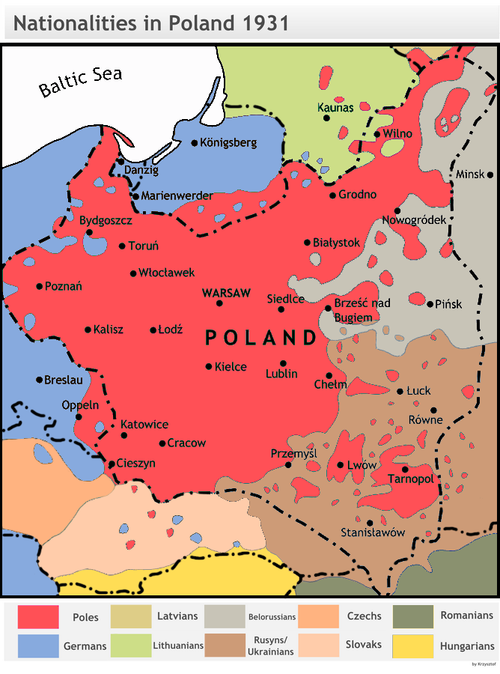
    The invasion of “Poland” is also severely misconstrued. The Soviets didn’t invade what we think of nowadays when we say Poland. They invaded overwhelmingly Ukrainian, Belarusian and Lithuanian lands that Poland had previously invaded in 1919. Poland in 1938, a year before the invasion:

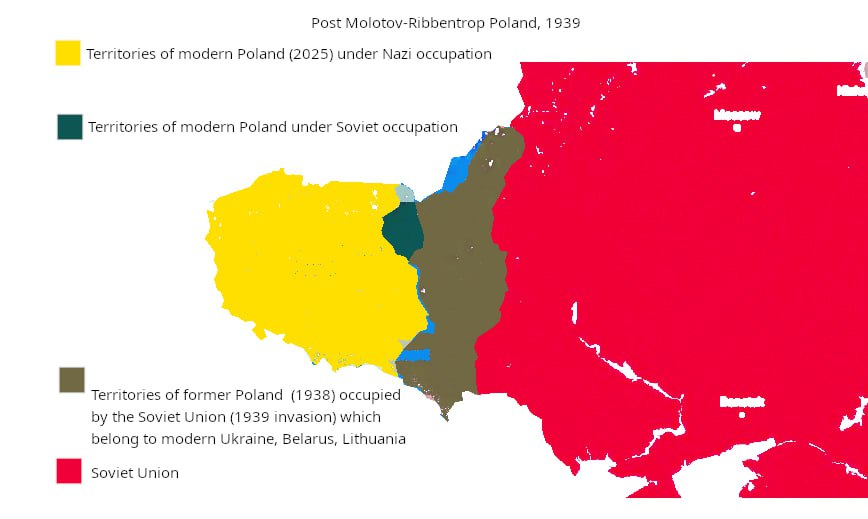
    “Polish” territories invaded by the USSR in 1939:

    The Soviets invaded famously Polish cities such as Lviv (sixth most populous city in modern Ukraine), Pinsk (important city in western Belarus) and Vilnius (capital of freaking modern Lithuania). They only invaded a small chunk of what you’d consider Poland nowadays, and the rest of lands were actually liberated from Polish occupation and returned to the Ukrainian, Belarusian and Lithuanian socialist republics. Hopefully you understand the importance of giving Ukrainians back their lands and sovereignty?

    Additionally, the Soviets didn’t invade Poland together with the Nazis, they invaded a bit more than two weeks after the Nazi invasion, at a time when the Polish government had already exiled itself and there was no Polish administration. The meaning of this, is that all lands not occupied by Soviet troops, would have been occupied by Nazis. There was no alternative. Polish troops did not resist Soviet occupation but they did resist Nazi invasion. The Soviet occupation effectively protected millions of Slavic peoples like Poles, Ukrainians and Belarusians from the stated aim of Nazis of genociding the Slavic peoples all the way to the Urals.

    All in all, my conclusion is: the Soviets were fully aware of the dangers of Nazism and fought against it earlier than anyone (Spanish civil war), spent the entire 30s pushing for an anti-Nazi mutual defence agreement which was refused by France, England and Poland, tried to honour the existing mutual defense agreement with Czechoslovakia which France rejected and Poland didn’t allow (Romania neither but they were fascists so that’s a given), and offered to send a million troops to France’s border with Germany to destroy Nazism but weren’t allowed to do so. The Molotov-Ribbentrop pact was a tool of postponing the war in a period in which the USSR, a very young country with only 10 years of industrialization behind it since the first 5-year plan in 1929, was growing at a 10% GDP per year rate and needed every moment it could get. I can and do criticise decisions such as the invasion of Finland, but ultimately even the western leaders at the time seem to generally agree with my interpretation:

    “In those days the Soviet Government had grave reason to fear that they would be left one-on-one to face the Nazi fury. Stalin took measures which no free democracy could regard otherwise than with distaste. Yet I never doubted myself that his cardinal aim had been to hold the German armies off from Russia for as long as might be” (Paraphrased from Churchill’s December 1944 remarks in the House of Commons.)

    “It would be unwise to assume Stalin approves of Hitler’s aggression. Probably the Soviet Government has merely sought a delaying tactic, not wanting to be the next victim. They will have a rude awakening, but they think, at least for now, they can keep the wolf from the door” Franklin D. Roosevelt (President of the United States, 1933–1945), from Harold L. Ickes’s diary entries, early September 1939. Ickes’s diaries are published as The Secret Diary of Harold Ickes.

    "One must suppose that the Soviet Government, seeing no immediate prospect of real support from outside, decided to make its own arrangements for self‑defence, however unpalatable such an agreement might appear. We in this House cannot be astonished that a government acting solely on grounds of power politics should take that course” Neville Chamberlain House of Commons Statement, August 24, 1939 (one day after pact’s signing)

    I’d love to hear your thoughts on this


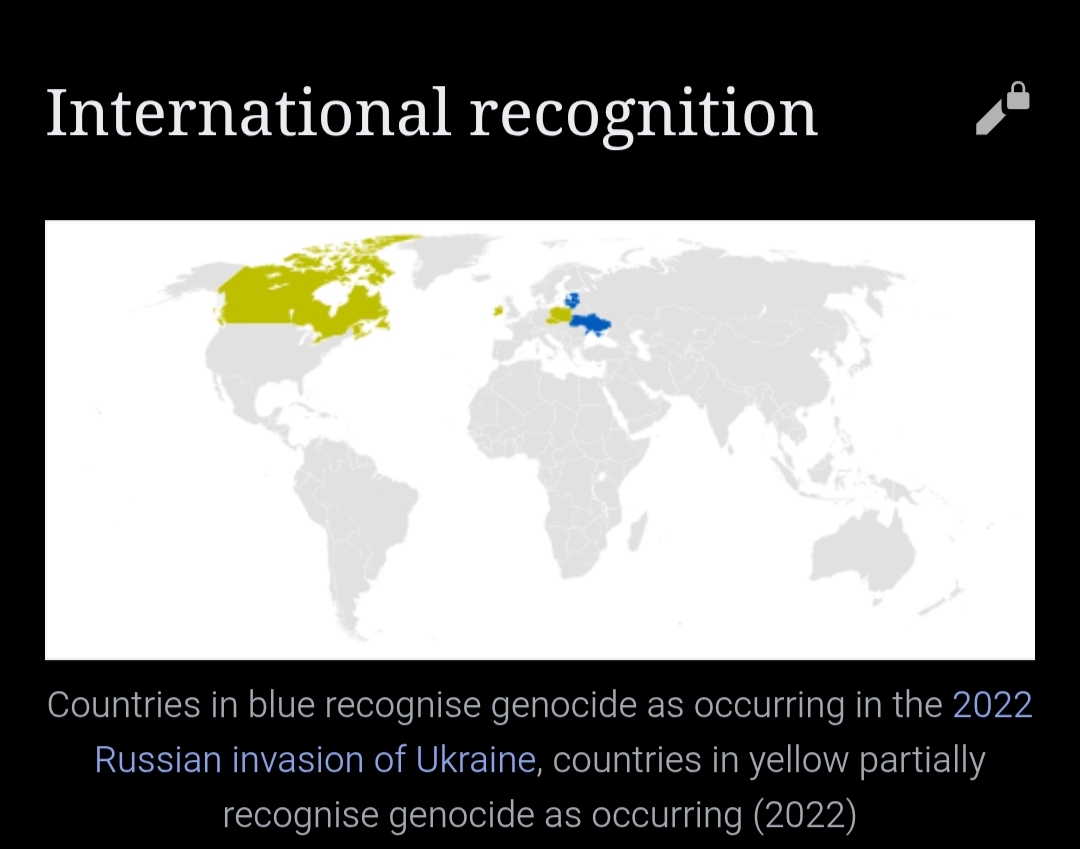
  • I cannot read in Ukrainian, but if the article contains independent verification of the tens of thousands figure, I’d love to see that section translated. What you quoted are anecdotal events, not evidence of tens of thousands, which is what I’m questioning. I’m not doubting some war crimes are being carried out, of course thats the case, I’m just saying they’re not nearly widespread enough to constitute genocide, as evidenced by the lack of support by essentially any country to such claims.

    You can leave the conversation if you want, but the figure of “tens of thousands” literally comes from the Ukrainian government. Per the Wikipedia article of the Abductions:

    Ukrainian authorities have verified the identities of over 19,000 abducted children, compiling and actively updating the data as part of an online platform: “Children of War”

    You are free to believe this figure if you want, but you’ll also be called on it when you use it to justify baseless claims of genocide which minimize what’s happening in Palestine. I’m not carrying water for Russia, I have given evidence of me heavily criticizing Putin in my main account, and believe me or not I actually hosted a Ukrainian refugee in my home when the war began. But it is not a genocide, that’s very harmful to Palestinians.


  • For reference, I was living in Germany during the beginning of the war, and my heating bill went from 150€/month to 450€/month, I had to move out of the apartment I rented because I couldn’t afford to heat it. Now I live in Spain, electricity prices have remained rather stable for the past 10 years thankfully besides some shocks during cold months, and gas is more expensive but not that big a change because we get gas from northern Africa too, not just from the US.


  • So, I recently visited the country for personal reasons, and I can share some insights.

    Salaries in Russia are lower than in most of the EU, and vary a lot between big cities and rural areas. Rural people are forced to survive with meager incomes of perhaps 400€ per month, a more decent salary but still normal in a city like Saint Petersburg would be some 1000-1200€ (for reference a fast food worker may have an income of 700-1000€), and ofc rich people are rich as in every capitalist country.

    First and foremost: housing and rent. Rent and housing are expensive in Russia if you live in the two big metropolitan areas of Moscow and Saint Petersburg. We’re talking price-to-income rates a bit better than what I see in Madrid or Baecelona, but still very much hostile to most people. It’s not as bad as in Spain yet because the Soviets built a lot of housing and when the USSR was dismantled, the housing was given to the tenants who inhabited them (previously they were of public rent), so you see a lot of mixture of different incomes in expensive areas because a lot of people still own the apartment from back in 1991, or they inherited it from their parents. Maybe you can rent a small flat on the outskirts of Saint Petersburg or Moscow starting at 500€, likely 600+€ if you look for something that’s not a very old and poorly maintained soviet apartment.

    There are plenty of cities in Russia where housing is a lot more affordable. For example, in Tyumyen, you can rent a one-room apartment for the equivalent of 250-350€ in Rubles. The issue is that in Russia salaries are very significantly lower in such regions unless you work in a very established field such as oil extraction or a strong industry. Even public salaries change dramatically, with a teacher easily earning twice as much in Moscow as in a smaller city far from Moscow such as Ryazan. Housing is however less of a burden because of the abundant housing stock from Soviet times, and because when all the state industry was dismantled during the transition to capitalism, those regions were left with a lot worse infrastructure and less job opportunities than they used to have, so there’s plenty of housing and not much in terms of job oportunities, which drives prices down.

    Food prices are also an interesting topic. Basic foodstuffs such as grains (buckwheat, oat, barley) are super cheap and you can get them for like 0.5€/kg at cheap supermarkets. Also some vegetables are affordable such as carrots, cabbage or onion, and root vegetables such as beets are also a cheap staple. Potatoes, likely due to sanctions, suffered a shortage some time ago and their prices rose to twice or three times the price, which caused a lot of unhappiness because it’s a staple food there. Dairy products have also inflated over the past years, and they’re similarly priced to what they are in EU countries, roughly 90 cents to 1€ for a liter of milk, butter being a bit more expensive than in the EU…

    Other more “luxurious” vegetables and fruits (for Russian climate at least) like bell peppers, tomatoes, strawberries, peaches etc. have also risen very fast over the past few years, again likely due to sanctions. Russia gets a lot of such fresh produce from Uzbekistan due to its good climate for these goods, and now with it being one of the only suppliers due to international sanctions, prices have gone up due to insufficient supply, especially during the winter. Bell pepper costs 4€/kg, tomatoes maybe slightly less, and strawberries have been up to 10€/kg (more than twice what I can find them for in Spain).

    Utilities remain non-expensive in general due to the abundant gas supply in Russia and the state subsidies for the gas industry, and since Russia’s gas exports have been harmed from sanctions, there’s an abundant supply inside the country, so peoples’ homes are warm, unlike we see in Europe where many people have to keep their heating off due to high gas prices (I’m writing this in Spain and my living room is currently at 13°C, my bedroom has been 9°C at some points this winter). Car fuel is also relatively affordable, much more so than in Europe.

    Cars are a funny thing, because Russia used to import a lot of cars from the EU and Japan, with Toyota and Volkswagen being very popular, but nowadays with the sanctions they’re mostly importing Chinese cars, which likely paradoxically drove the car prices down.

    Public transit remains affordable, with tram and metro rides costing perhaps 0.8-1€ depending on the city, and buses and trolleybuses being cheaper than that. In more rural environments, people rely a lot on minibuses (so called marshrutka) if they don’t own a car, I have no idea about the prices of those. Trains in Russia are adequately priced (think 30-40€ for a ride between Moscow and Saint Petersburg) and quite punctual to my surprise.

    If you have any further questions I’ll try to answer :)