

1·
1 hour agoThis! It’s fast. It’s reliable. Love it!

Hi! 👋 I’m Gerrit and in love with the Internet since 1994. 💞 Media ▹ Communication 👨🔬 Entrepreneur & Consultant at eicker® [iCare] ⏻ Reinschauen: eicker.TV 📲 Get in touch! 📇🇩🇪🇬🇧 #Fedizen #AI #Tech #Media #Sovereignty
This! It’s fast. It’s reliable. Love it!

The feature itself isn’t the biggest issue. Plenty of people would find it genuinely useful. The bigger problem is executives denying it exists until they’re ready to talk about it. If users can’t trust what a company says about face recognition today, why should they trust its privacy promises tomorrow?
Exactly. Dominance is earned by building products people genuinely prefer, not by making alternatives harder to reach. Every restriction becomes an incentive for competitors to innovate faster. If the US had focused on winning through better models, stronger companies, and real competition instead of political leverage, it would probably be in an even stronger position today.
This! The irony is that every attempt to turn AI into a geopolitical choke point becomes free marketing for open weight models. People tend to trust tools they can actually control. If access can vanish with a policy memo, resilience suddenly matters more than benchmark bragging.

If the price of visa free travel is giving a foreign government access to Europeans’ biometric data, then it’s a bad deal: The EU lectures the world about privacy and digital sovereignty, yet too often folds when Washington asks for another exception!
Open models are one of the few forces keeping AI from becoming an oligopoly: Without them, a handful of companies would control the technology, prices, and the rules of what users are allowed to do. Competition from open models is already pushing the entire industry to innovate faster and charge less. 💪😎✌️
You’re describing different guardrails: Most users don’t want arbitrary censorship, but almost everyone benefits from guardrails that reduce clearly harmful or illegal outputs. The real debate is not whether they exist, it is who decides where the line is drawn.
I think the bubble will not burst but deflate long before the tech disappears: Plenty of companies will burn cash and investors will get wrecked, but the genuinely useful products will stick around. Guardrails will improve too, because trust eventually becomes a competitive advantage.
Europe keeps announcing »digital sovereignty« while handing its most valuable data, AI workloads, and cloud infrastructure to American hyperscalers: You don’t achieve independence by subsidizing chip factories while renting your digital future from foreign tech giants! That’s dependence with better PR.
Calling every safety measure a »nanny state« is a convenient way to avoid the actual question: Parents, family, and community absolutely matter, but companies still have a responsibility to reduce foreseeable harm. We expect that from car makers, drug companies, and social platforms too.
You’re underselling what companies can do. An LLM can’t verify reality the way people imagine, but it can detect patterns that correlate with crisis well enough to escalate, refuse harmful advice, or encourage real help. Seatbelts don’t prevent every crash either: they still reduce harm.
Personal responsibility does not disappear, but neither does product responsibility. If a company builds a system meant to converse with millions, it should not predictably reinforce obvious crises. We expect guardrails in cars without abolishing driver responsibility. The same principle can apply here.
The problem is that most companies aren’t really automating: as long as they continue to pay staff and invest in AI without changing their processes, they’ll simply be overtaken by others.
Hehe… Good question. I don’t see a dip on the horizon at the moment. But ASML, Nvidia, Google, Amazon and the like are still a long way from reaching their full potential. However, I find the Chinese AI providers even more exciting in the long term.
Calling every correction the »end of the AI bubble« has become a tradition. The internet, smartphones and cloud computing all had brutal selloffs before transforming the economy. If AI delivers the productivity gains many expect, today’s pullback may look like noise rather than the beginning of the end.
The surrogacy story is a distraction. Spahn’s real credibility problem is the mask deal scandal: billions spent, dubious contracts, missing transparency, and taxpayers left carrying the risk. Resigning over the side issue while dodging accountability for the main one would be peak political theatre.
If even the EU starts slowing climate measures, it risks sending the message that every target is negotiable. Businesses need predictable rules, not repeated delays. The longer emissions cuts are postponed, the steeper and more expensive they’ll ultimately become.
If the allegations hold up, this is not just a tragedy, it is a product safety failure. AI should be able to recognize a mental health crisis and avoid reinforcing delusions. Engagement metrics are meaningless if the system cannot reliably tell the difference between roleplay and someone in real danger!
The irony is that Musk himself has already cashed out enormous wealth over the years: Whether the stock jumps or drops today barely changes his position. The people really feeling the pain are the retail investors who treated him like an infallible genius instead of managing their own risk.
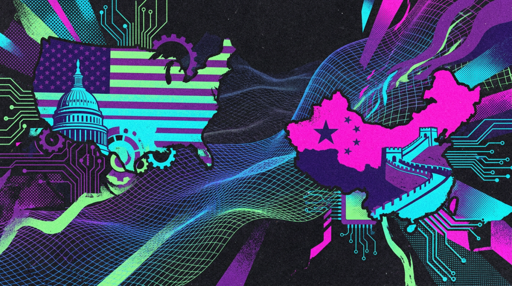
Authoritarian governments don’t need superintelligent AI. They need AI that’s just good enough to monitor more people, automate more decisions, and scale censorship at a fraction of the cost. The real danger isn’t AI becoming all powerful: It’s making authoritarianism dramatically cheaper and more efficient.