This doesn’t have any practical application in Ukraine.
Ukraine detects FPV drones with numerous distributed and networked microphone/acoustic sensors. You’re not going to get any cheaper than a used phone paired with a $2 USB solar panel.
The larger Shahed/Geran and above stuff isn’t limited by radar detection. What they need are cheap interceptors to deal with swarm attacks.
If you crack the combination of “actually cheap” and “reliable interceptor”, the US military industrial complex is going to build you your very own Scrooge vault.
I’ve sometimes thought that WW2 flak cannons (~artillery) with a programmable fuse (set immediately before “launch” by radar) could be effective. You would get longer range than C-RAM or laser and artillery shells are cheap. Shahed/Gerans are not particularly fast or durable. It wouldn’t take much to make it fall out of the sky: close enough is good enough.
The Russian Navy stays way, way the hell away from the Ukraine coast these days. The drone-boat bombs have them running scared. Even Sevastopol in Crimea is too risky.
The system is called Loki and sold by SAAB now, but well, the gun base can be an AA/Naval gun with origin from the 1930ish, but then some parts are changed to get a speed to follow drones, the original handcranked aiming systems.
Radars are very much in use in Ukraine. There is a whole range of air targets besides FPV drones, there are ballistic missiles, fighter planes, bomber planes, helicopters, gliding bombs, and ships, all of which require a radar to detect.
Acoustic sensors have limited range. By the time it detects a missile, it’s already flew one kilometer away, and it’s too late to grab your AA gun. Gliding bombs are silent.
Radars have 50+ km range, and allow to shoot bombers and ships from beyond the border with expensive US-provided missiles.
Again, this particular DIY radar has no application in Ukraine. It does not have a 50+km range (10km). It can not direct or interface with an interceptor missile, of any kind, to shoot down TBMs, Shaheds, etc. The critical issue really is how many interceptor missiles Ukraine has and far less about janky early-warning radar coverage.
Acoustics are used for FPVs, which have a tiny radar cross section and can fly at tree top altitude or lower. A basic/crude DIY radar would not be effective there and at $12,000 vs $Free, acoustics win hands down for FPVs. The Gepards (AA gun) have their own onboard radar already for cruise missiles/shaheds. No one is proposing or expecting acoustics to track missiles or bombs. These are two very different problems.
The Russian Navy stays way, way the hell away from the Ukraine coast these days. The drone-boat bombs have them running scared. Even Sevastopol in Crimea is too risky.


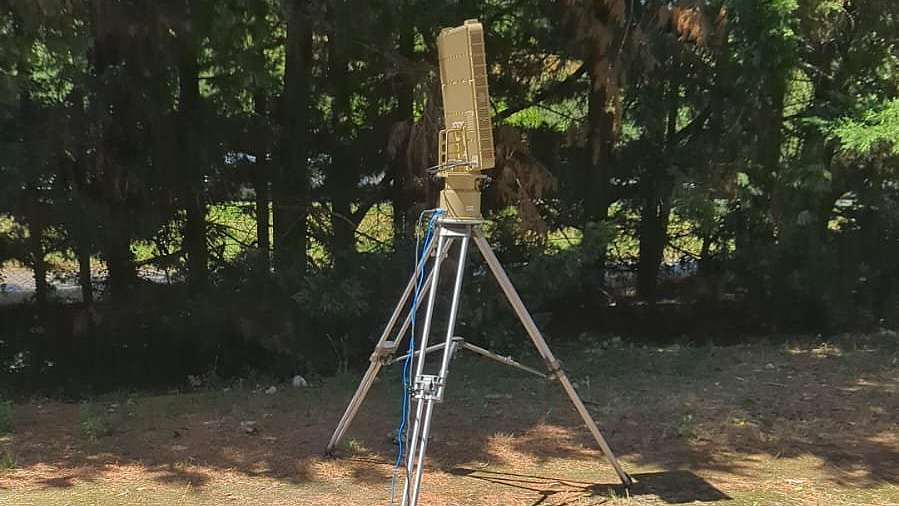
This doesn’t have any practical application in Ukraine.
Ukraine detects FPV drones with numerous distributed and networked microphone/acoustic sensors. You’re not going to get any cheaper than a used phone paired with a $2 USB solar panel.
The larger Shahed/Geran and above stuff isn’t limited by radar detection. What they need are cheap interceptors to deal with swarm attacks.
If you crack the combination of “actually cheap” and “reliable interceptor”, the US military industrial complex is going to build you your very own Scrooge vault.
And then defense contractors will sell it to the government for a 10,000% markup.
But in all reality they would steal it after the inventor commits suicide with 2 rounds to the back of the head
This is antithetical to the US military industrial contractor complex doctrine.
I’ve sometimes thought that WW2 flak cannons (~artillery) with a programmable fuse (set immediately before “launch” by radar) could be effective. You would get longer range than C-RAM or laser and artillery shells are cheap. Shahed/Gerans are not particularly fast or durable. It wouldn’t take much to make it fall out of the sky: close enough is good enough.
The system is called Loki and sold by SAAB now, but well, the gun base can be an AA/Naval gun with origin from the 1930ish, but then some parts are changed to get a speed to follow drones, the original handcranked aiming systems.
Video from Swedish Defence https://www.youtube.com/watch?v=yO4QMZ1n4_Q
Radars are very much in use in Ukraine. There is a whole range of air targets besides FPV drones, there are ballistic missiles, fighter planes, bomber planes, helicopters, gliding bombs, and ships, all of which require a radar to detect.
Acoustic sensors have limited range. By the time it detects a missile, it’s already flew one kilometer away, and it’s too late to grab your AA gun. Gliding bombs are silent.
Radars have 50+ km range, and allow to shoot bombers and ships from beyond the border with expensive US-provided missiles.
Again, this particular DIY radar has no application in Ukraine. It does not have a 50+km range (10km). It can not direct or interface with an interceptor missile, of any kind, to shoot down TBMs, Shaheds, etc. The critical issue really is how many interceptor missiles Ukraine has and far less about janky early-warning radar coverage.
Acoustics are used for FPVs, which have a tiny radar cross section and can fly at tree top altitude or lower. A basic/crude DIY radar would not be effective there and at $12,000 vs $Free, acoustics win hands down for FPVs. The Gepards (AA gun) have their own onboard radar already for cruise missiles/shaheds. No one is proposing or expecting acoustics to track missiles or bombs. These are two very different problems.
The Russian Navy stays way, way the hell away from the Ukraine coast these days. The drone-boat bombs have them running scared. Even Sevastopol in Crimea is too risky.
How can you be so dismissive? Of course it has practical application in Ukraine.