Um. I could’ve told you that in March 2022. Still, good to hear it from the horse’s mouth.
There is and never will be any common strategic planning and common spending without common foreign and fiscal policies. So I assume his country will not loudly cry “but our souvereignity!” when those things are proposed…
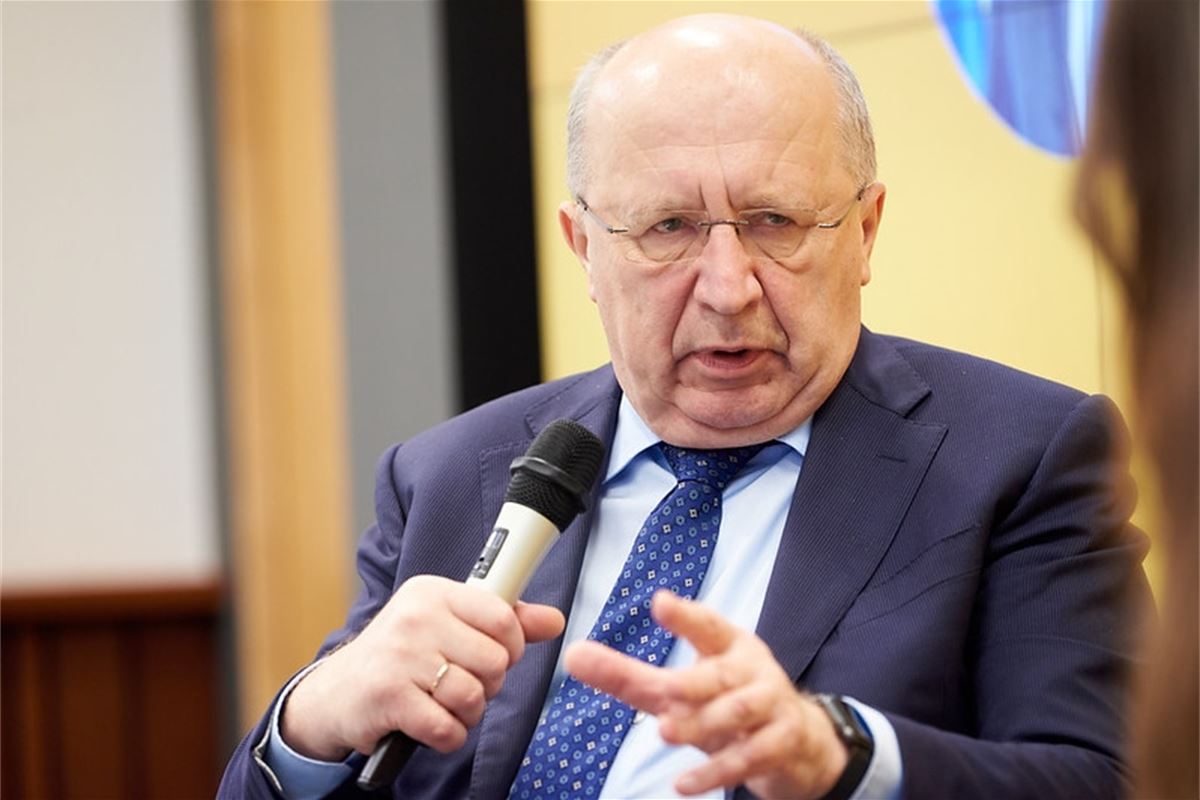
“While insisting that member states should remain in the driver’s seat of defense policy, the former Lithuanian prime minister said…”
So that’s a no. Thx, bye.
“In practical terms, Kubilius wants to advance plans for […] a European Security Council […]. Such a body could discuss issues ranging from the European pillar of NATO to defense industrial policy.”
Yeh, no. That idea would not close any gaps but create them by making the EU dependent on single members that can veto everything just by withholding their military assets that are an integral and coordinated part of a common defense architecture.
"In his view, European military doctrines should follow Ukraine’s example by better integrating innovation and smaller players into procurement processes and defense planning.
For now, Kubilius said, “there is not enough space for start-ups and small and medium-sized enterprises to grow up.”
At the same time, he added, Europe’s largest economies, including Germany and France, still purchase relatively little defense equipment directly from their European partners.
So this is the actual issue. Got it… Again: Thx, bye. We will no be the piggy bank for your ambitions to build up domestic industry. Countries making decisions based on how much their own industry can benefit instead of military considerations is the actual cause for the insane fragmentation of EU defense planning and spending, not a solution.
Yeah, I don’t see the EU being able to have a unified defense policy until defense and foreign policy is an EU competency. The only reason it didn’t become an issue so far was because NATO was effectively the EU’s defense organization.
to close capability gaps
What are the gaps?
domestic companies in Germany currently receive 60% of defense orders — double the share recorded in 2020
Which must mean US spendig went from 60% to 30% and not that Germany stopped buying from the EU.
The European Commission is expected to present a package by early July aimed at creating a single market for defense. The objective is to reduce fragmentation and lower the costs of growing the defense industry.
What does that mean? The following doesn’t make sense.
We need to find a way to balance the [existing] bottom-up approach with much more top-down influence,” he told the audience on Wednesday.
In his view, European military doctrines should follow Ukraine’s example by better integrating innovation and smaller players into procurement processes and defense planning.
That won’t work. Smaller players means fragmentation.
The EU has learned nothing from Boeing’s dominance. They are bound to create big players that fix bad products with lawyers and corruption.
The national approaches are top down. To call that bottom up and assume that it will be better when the EU dominates it sounds like a very dangerous idea to me.
What are the gaps?
You know. I’ve literally told you only yesterday. What are you doing here?
The things you list there are NATO gaps, based on NATO’s, or more correctly the US’ ambition to project power and play world police.
Why do we need heavy air transport capabilties when we have rail lines? How is Ukraine right now handling destruction of Russian air defense (not even speaking about their actual performance vs what they should be able to do on paper) with just a fraction of the EU’s SEAD/DEAD capabilties? How are they even operating without the US sharing data for more than a year? Might Europeans actually be able to gather information about a neighbour on the same land mass effectively with less ressources? And why is the ability for nuclear annihilation not enough, but the ability to destroy the planet another 50 times after that is somehow a gap?
Yeah, we know. NATO is weaker without the US, but that’s true for any member. Just because some clown in the White House is too stupid to realize this and plans artic warfare after alienating basically 95% of NATO’s artic capabilities or getting a strait blokced by mines while insulting allies with the actual demining capabilities, we don’t need to make the same stupid mistake. The US capabilities mostly align with US requirements. Ones that are no longer NATO requirements when the US decides to not be a part anymore.
Overall I am agreeing with your comment but I am wondering about
How are they even operating without the US sharing data for more than a year?
Is that still ongoing? Who is providing intelligence then? It didn’t sound like France:
A French defence ministry official also declined to comment directly on the president’s claims, but said much of the intelligence France provides is technical in nature.
https://feddit.org/post/30634928
Could it be that it is explicitly vague since Ukraine is hitting deep inside Russia and Russia shouldn’t judge it as a western attack?
You need heavy air capabilities for two reasons.
First, most of the EU’s frontier has non-European gauge track. So, it doesn’t help to be able to rely on rail when you have to stop rail shipments well behind the front lines. Upgrading the rail is going to be a generational project.
Second, rail infrastructure can be destroyed and it is generally harder to get rail infrastructure back up after being bombed. Not being able to deploy forces while you wait for repairs.
most of the EU’s frontier has non-European gauge track
Adapting to Western track gauge (thus also not running on the standard Russia uses for their logistics would indeed be a worthwhile investment in a countries defense, doubling also as a investment into civilian transport capabilities.
Second, rail infrastructure can be destroyed and it is generally harder to get rail infrastructure back up after being bombed
Reality disagrees, heavily so as Russia is demonstrating for years now. And you’re probably underestimating the complexity of keeping runways of a quality, width and length to support heavy transports operational. Anti-runway bombs and missiles are a whole class of weapons developed just for that reason.
PS: Speaking of… is this not accurate?

Sorry to tell you, but given the existence of Kaliningrad and Belarus the actual front line will not be far from Poland. (And Scandinavia and Finland are mostly irrelevant for this discussion as neither flight nor rail will be the primary mode of transportation to get there.)
Regarding adapting non-Western gauge track, it is worth making the transition. The item that I addressed and you dodged is timeline.
Regarding Russia rebuilding its rail infrastructure, Russia has invested a significant amount of money in military engineering brigades to repair rail corridors. Also, Russia isn’t fighting off an invading force.
You’re still leaving out Finland and the Baltics. It also depends on what Russia may attempt to take back. Putin’s current goals appears to be reestablishing control over Soviet territory. That puts the Baltics at risk. You could see Russia attempt to take the Baltics similar to how it took the Crimean Peninsula and make the EU choose if it is worth it to conduct a war to liberate the Baltics like Ukraine had to debate liberate the Crimean Peninsula.
You’re still leaving out Finland and the Baltics.
I explicitly mentioned Finland (transport by ship instead of rail or air) and implicitly addressed the Baltics as any attack on them will start with an attempt to close the Suwalki gap between Kalinigrad and Belarus, which makes Eastern Poland the front line.
and you dodged is timeline
Some rail lines in the Baltics were already reworked, some were build new, years ago with a new track guage not matching the former Russian one but intentionally not to EU standard. So I’m not addressing the timeline because there was obviously no interest in the first place.
Asking for other opinions.
Looking for engagement.