When researching a variety of Norwegian spoken by some people in the Midwest known as “norst” or American Norwegian, someone commented that it was like the Quebecois of Norwegian.
My native language is English and I am American though, so I guess my own dialect of English would be the Quebecois of my language, or Canadian English too.
You must log in or register to comment.
Somerset countryside, they’re unintelligible.
American English is the most spoken kind and pretty close to British RP, so it’s not Quebecois. If you want a weird dialect, maybe Jamaican patois, or some of the ones from backcountry UK.
Probably Finland Swedish, a group of Swedish dialects spoken in parts of Finland.
Fun fact: Linus Torvalds is a Swedish-speaking Finn
Cypriot Greek
Newfy “English” is the Quebecois of English dialects. It’s barely understandable by the rest of the country. An Englishman and an american/Canadian will be able to understand one another mostly with no problem. There will be the odd slang word that trips 'em up but, overall, the message comes across. Newfy is hard to understand what most words are, the accent is thick.
Similar to a Scottish or Welsh accent, I should think, to north Americans.
whatever the F, brad pitt was talking in the proper fucked movie.
Pikey
Lol yep, newfies are borderline unparseable sometimes. The character Hitch from Shoresy will give you a relatively mild taste of the accent, and sometimes it sounds like he’s speaking gibberish.
This scene is similarly hilarious, but for a different accent.
Hot fuzz is a fantastic movie lol
Yarp!
That makes sense!
OP what does the question mean?
Your post just asks what the Quebecois is, but you forget to say what it means to ‘be a Quebecois’
I understand the question.
French people think that the Canadian French dialect spoken in Quebec sounds different, because it does, but you can still understand. They’re still mutually intelligible just with some different words and accents.
OP is asking what the English variations there are throughout the world.
I am curious if Jamaican Patois would count as a different language entirely, just with some recognizable English words.
Wa go on? –> hello. (Etymology: What’s going on?)
I understand the question.
Oh good! 😮💨
OP is asking what the English variations there are throughout the world.
Then why did she ask about Norwegian? Why did she say “of your language” rather than English? Why did she answer my question by saying she means dialects from the Americas?
I am curious if Jamaican Patois would count as a different language entirely
There’s no academic/formal definition of what counts as a different language rather than a variant. Then it gets politically contested: peoples who want to assert their separatedness claim their language is totally different (e.g. Ulster Scots). That’s one reason if you ask “How many languages are there in the world?”, linguists tell ya “Between 4000 and 8000”
OP asked about “your language” in the title, and in the body asks about English, which is my language. So to me she’s asking about English, but to you she’s asking about whatever else you speak.
Maybe you are missing the context that there was another popular post on the threadiverse recently about an American dialect of norgweigian in the American Midwest.
I’m assuming from the context, maybe a region spoken of your language in the Americas?
I’m assuming from the context, maybe a region spoken of your language in the Americas?
You are trying to figure out from context what you yourself meant???
What is going on I’m so confused.
Well, I believe Quebecois has a reputation for being “more French than French”. For example, they refuse to say “le parking” like they do in France. Quebecois insists on using “le stationnement”.
Maybe that’s what they meant about Norst and Norwegian?
@may_be @Bluescluestoothpaste Yep, le stationnement!
Oui, et la fin de semaine au lieux du “weekend”
Sauf quand on entre dans du langage technique. “Mon windshield était scrappé, pis j’avais un flat. M’en va au garage - maudit bon Jack mon garagiste - pis il me dit que mes chucks pis mes callipers étaient finis! (c’est pas garantis les gallipers?)”
@T00l_shed @pticrix Oui il y a des gens qui parlent franglais mais ce n’est pas tout le monde, tout dépend de la provenance. 😉
J’ai une craque dans mon parebrise pis yé péter, en plus, J’ai un pneu à terre sti…
Il y a tellement de jargons (slang) différents au Québec.
Ben oui, on parle le franglais lol, 'specialement a l’outaouais
Quebecois to French people sounds like someone from the north of France, 300 years ago. Never heard a French person call it more French than France. In face, generally speaking, they think it sounds worse
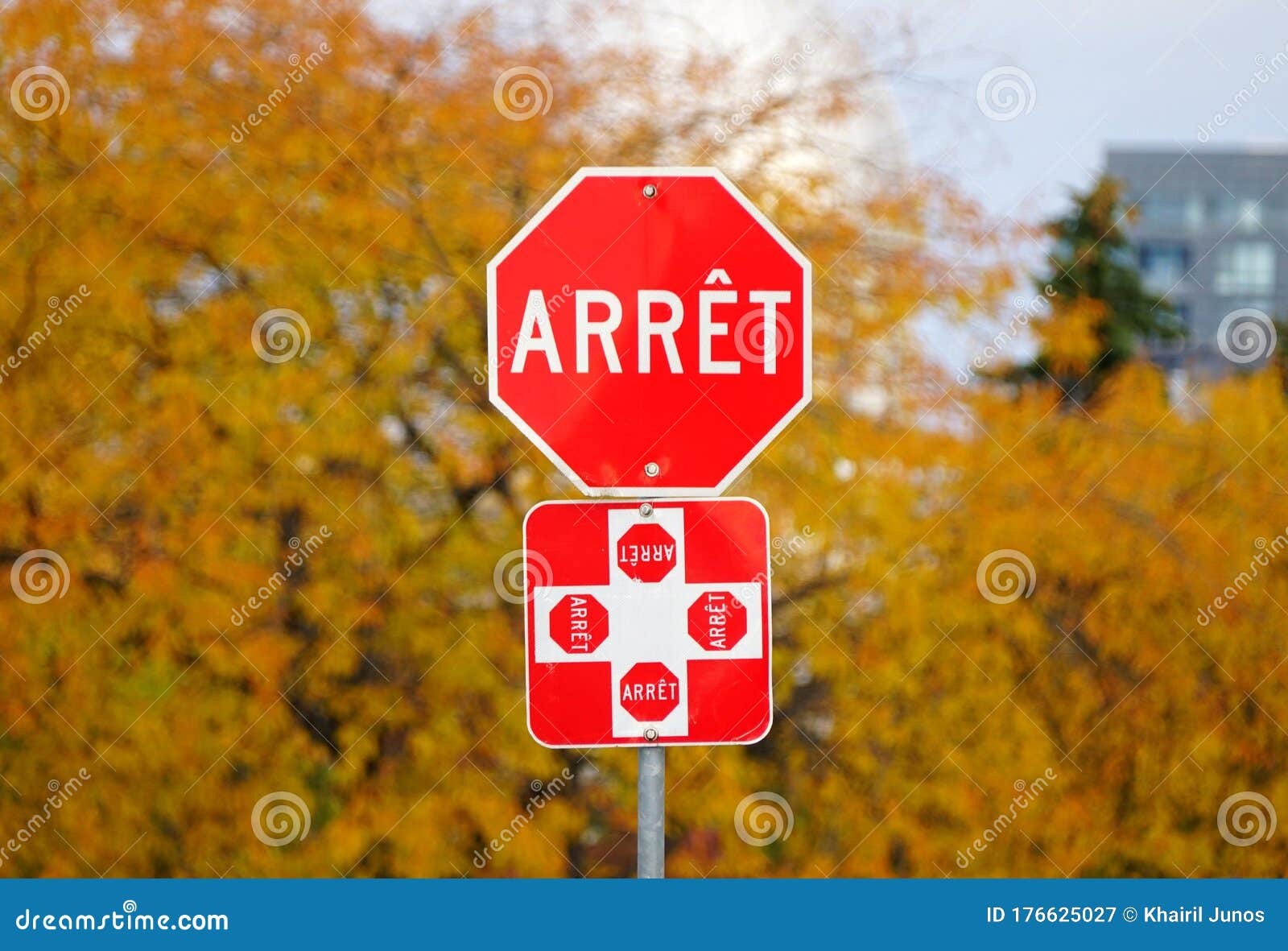
French stop signs say STOP. Quebecois stop signs say… ARRET?
This is correct. this is what stop signs like in Quebec:
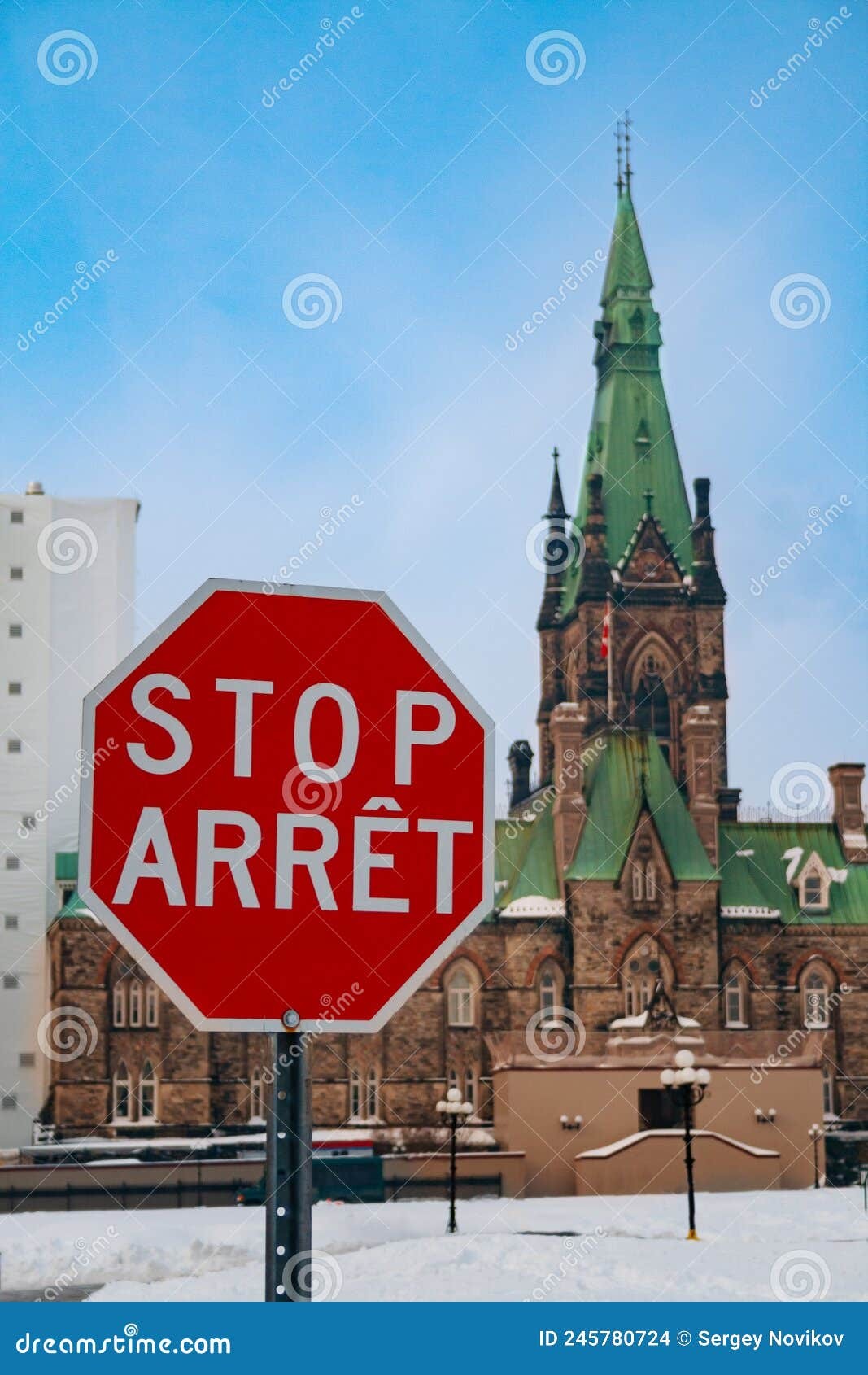
Even outside of Quebec you’ll find stop signs with both Arrêt and Stop in areas with large francaphone populations:
Maybe!!
In this case would Anglish count?
It has neither the positive reputation you assume nor do Quebecois say “le stationnement”.
It has neither the positive reputation you assume
This is true. Quebec French is often looked down on by other native French speakers. It’s seen as a rougher version of the language, mostly due to its accent and different pronunciations, and often Quebecois’ simplified vocabulary compared to the French. But what the previous comment was about is that Quebec French is closer to what French sounded like a couple centuries ago, and the language in France has shifted in a different way.
nor do Quebecois say “le stationnement”.
Yes we do.
Quebec has a problem with English in particular as it is seen as overtaking its culture. As such, a lot of English words that the French have directly adopted are instead translated into Frencher versions of the words. Stationnement vs parking is one example, magasinage vs shopping is another.
Nah nah nah, I love our cousins. Quebecois, Cajuns, Wallons, we’re all a big cosy family. In my mind at least!
Well, I suppose it makes perfect sense that a French person would consider “more French than French” to be a positive reputation.
In the UK, Scots is close enough to English to be almost comprehensible to an otherwise unprepared British English speaker. (Case in point: Trainspotting.)
Ukrainian and Russian has a similar relationship, only with Polish in place of English.
For German, I guess Pennsylvania Dutch would come closest? At least in the sense that it’s a variety of German spoken in North America. It’s barely understandable for modern-day Germans.
How about Swiss German?
Or countryside German?
Even within Swiss German itself, the people in the Canton of Valais speak such a strong dialect (actually a group of dialects) that most of the rest of Swiss German people don’t understand them.
I think most larger (or older) immigrant communities have their own dialect. Runglish is Russian spoken with lots of words borrowed-adapted from US English.
In parts of Eastern Ukraine and Western Russia, there is also surzhyk, which is a difficult-to-describe blend of both languages, often difficult to comprehend to those who do not speak both or dis not grew up in the area.
I’d guess Cajun English? Since it has so much French influence and also is its own distinct dialect with unique origins.
May I submit: Cajun Night Before Xmas
@may_be Quebecois is only derived from French
I am Quebecois, and despite my slang, nothing is really derived from English.Plus québécois que moi, vous allez mourir 😉
Faque, rien de pareil dans mon parlé très original face au Norvégien ou l’anglais États-unien… 😋There actually are a number of derived languages/dialects of English like Jamaican Patois or other English-based creole languages
@NotSteve_ But where is the connection to Québécois?
My native language is close to French, even though Parisian French doesn’t try to understand us most of the time; they say we have an incomprehensible accent.Well it’s more than just the accent. The grammar is slightly different too, right?
@ageedizzle I don’t think there are any grammatical differences if it’s correct French; otherwise, it’s slang or a blatant error due to a lack of education.
La langue français, qu’elle soit écrite par un québécois ou un français de l’Europe, voir de la France. La grammaire demeure la même à mon avis.
Je suis en Abitibi-Témiscamingue dans le nord-ouest du Québec à environ 30 minutes de la province de l’Ontario puis plusieurs parlent le franglais plutôt que le français.
D’ailleurs, je suis d’accord et c’est véridique que notre langage ou plutôt notre accent que nous utilisons est plus près du Français de la France du 16ème siècle que celui du Français d’origine.
there’s some grammatical differences, the same as there are between American and British, just the intelligibility is mostly high.
“je parlons” feels very old fashioned and flowery to modern french french, but it’s seen as normal in quebecois
Svenska är inte mitt språk, men svaret är självklart skånska.
Not sure if this answers your question exactly, but I once heard a guy say “I speak English and bad English.”
For me, I speak the King’s English (aka English from England), and I also speak American English. I prefer the King’s English, but there are times when American English is just better. I could not tell you how to spell manoeuvre and even typing it, I have to Google it to be sure it’s right because fuck that word sideways. Maneuver just looks better. But honour, valour, even colour are just… better… than their American counterparts. And centre and metre just feel right, though it’s pronounced -ter. As for theatre, theater and theatre are two different things. Theater is the same thing as cinema, and theatre is where a stage play is performed, or like, the theatre of war. It’s a more dramatic term.
“Diarrhoea” always fucks me up. Hard to spell, too.
I completely agree. Sometimes I use the non-American spelling of things, like metre and colour.
It’s funny that Kneecap have now gotten worldwide attention for Ulster dialect, coz Ulster dialect sounds weird to most of us.