

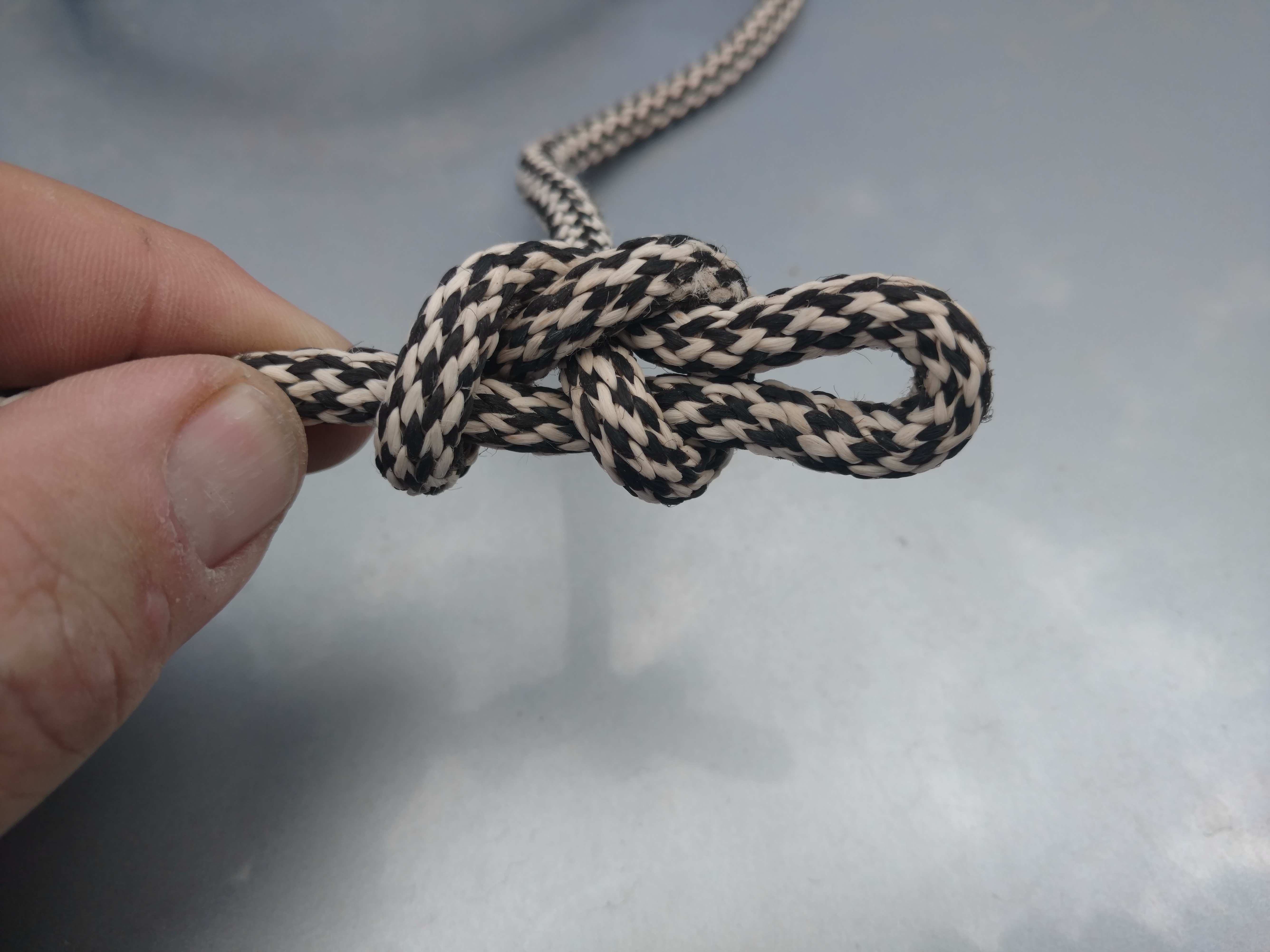
Years ago I bought a canoe, the ropes had several of these knots. I have never been able to replicate them (granted I have not tried a lot either).
Some other angles:
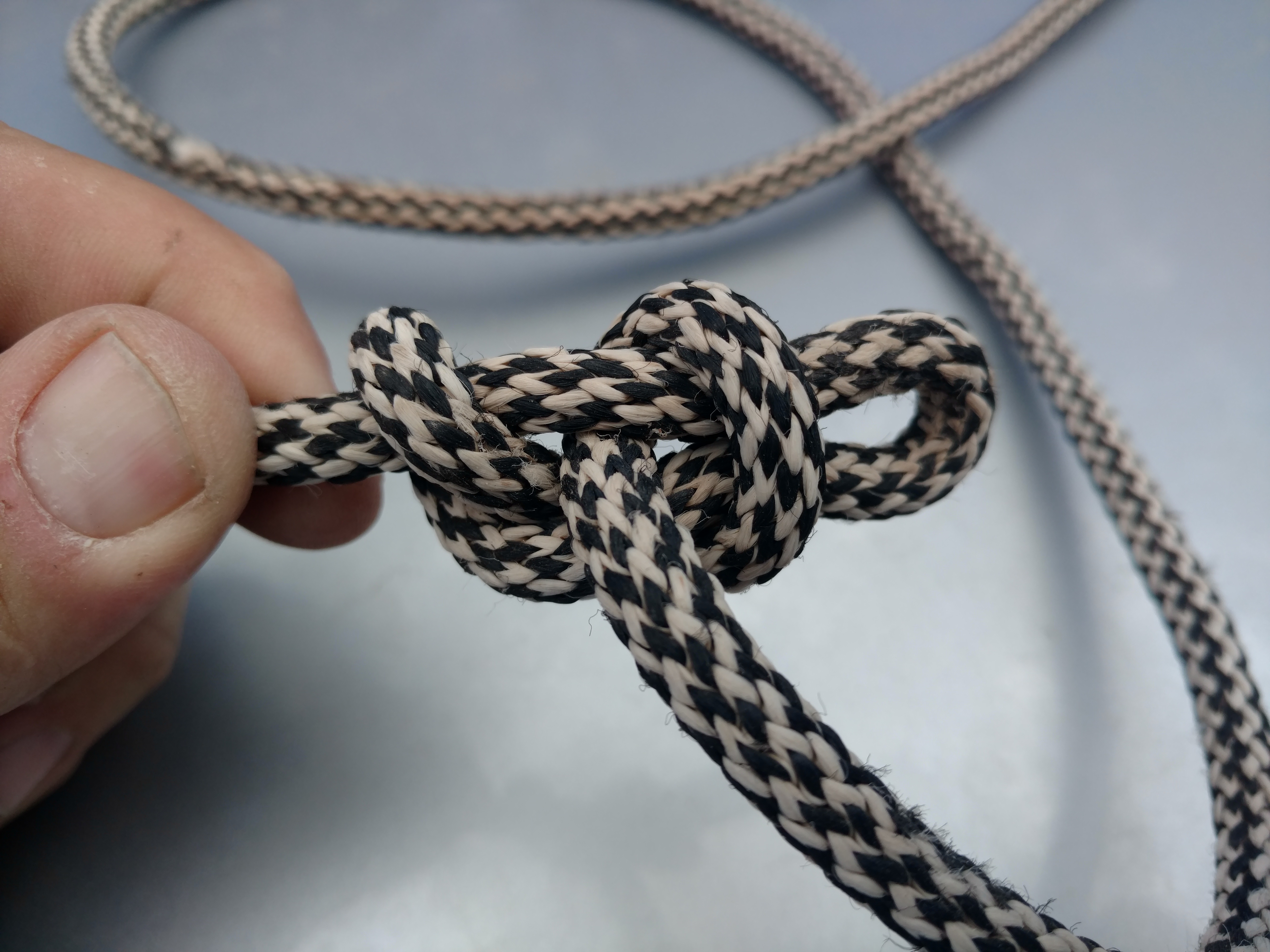
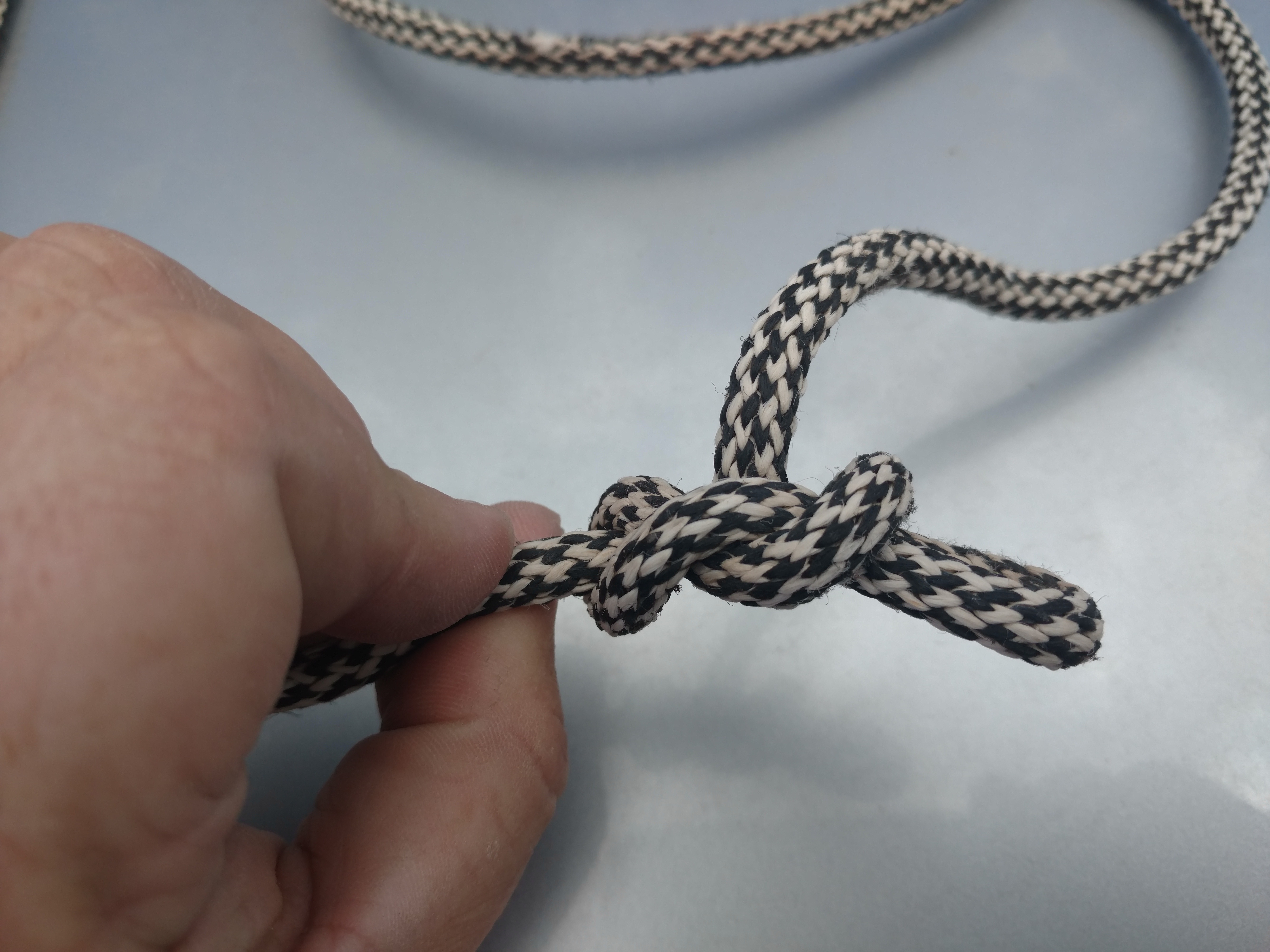
Years ago I bought a canoe, the ropes had several of these knots. I have never been able to replicate them (granted I have not tried a lot either).
Some other angles:
It does look like a hitch of some sort. If you are trying to achieve a loop that does not pull tight, I always used a bowline knot.
Does a figure 8 on a bight not do the same?
It does, but the bowline is easier to untie after an extreme load. But then the bowline is not safe on it’s own, it needs to be backed up with another knot. An overhand on a bite also serves the same function but I think that’s even harder to untie after loading especially with skinny material. Not sure about that though, I’ve just heard of people not being able to untie them in their anchors for rock climbing.
Also figure 8 requires the most rope, still my favorite knot though
I am not an expert by any standards, that is just one I remember from scouts. I had to look up figure 8 on bight, and that looks like a really useful knot, especially because you can do in the middle of rope, without the end. I looked up why anyone would do a bowline then, but i guess it’s a little easier to undo when you’re done with the knot, so it’s useful in certain rescue situations, otherwise the figure 8 is considered stronger. Do you have experience with either?
Bowline is used in rigging for lifting purposes to tie tag lines
Also great for saving yourself when thrown a rope in the ocean to pull back to safety.